There is a map for the threshold you’re standing in
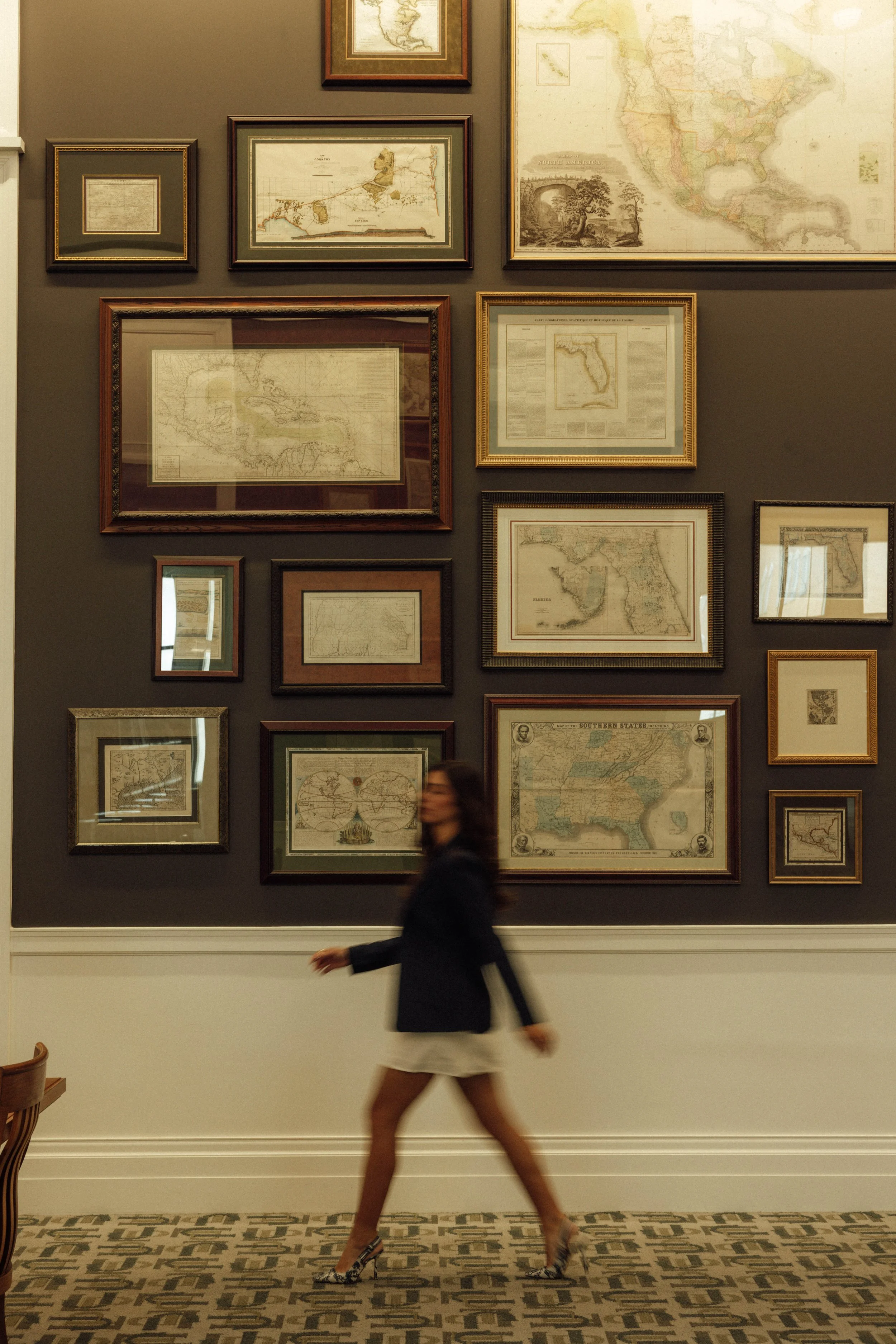
There is a map for the threshold you’re standing in.
I want to tell you about the room where I learned that.
For years, I owned a shop called Merkababe Designs. Jewelry, crystals, a particular quality of space that I didn’t fully have the language for at the time. Women came in for a ring or a necklace or a piece of labradorite, and they stayed… sometimes for hours… because something else was happening in that room. Something underneath the transaction.
Over and over, the same story arrived in a different outfit.
A break-up or a divorce that had been the right decision, but still felt like falling. A career that looked good on paper and no longer made sense from the inside. A move, a starting over, a grief that had no publicly acceptable name. What I came to think of as a silent inner battle. The kind no one can see from the outside. The kind where the performance of “okay-ness” is the most exhausting part.
It was clear they weren’t really there for the jewelry.
And I kept noticing something: I knew how to hold them in that in-between space. Not because I had the right credentials. Because I had lived it. Multiple times. And because I had, in each version of myself, been studying something. I was studying the mechanics of what it actually takes to become someone new, without quite knowing that was what I was doing.
Let’s talk about the word threshold.
From the Old English therscold: the piece of timber or stone at the base of a doorway. The thing you step across when you enter. In its oldest agricultural use, it referred to the place where grain was threshed or separated from the hull, from the husk, from what it used to be, so it could become something useful.
The threshold I’m talking about is the place of transformation through separation.
In the academic language I’ve spent the past fifteen months studying, this state has another name: liminality. From the Latin limen, also meaning threshold. The anthropologist Arnold van Gennep described it in 1909 as the middle phase of every rite of passage, the space between who you were and who you are becoming. Victor Turner, writing in the 1960s, called it the place “betwixt and between.” Neither here nor there. Neither the old self nor the new one. Suspended.
What I have come to believe, from the inside and from the scholarship, is that this state is not a problem to be solved. What it actually is is a passage to be navigated. And it has a structure. There is, in fact, a map.
Here is the modern problem I keep watching:
No one tells you what the threshold actually feels like from the inside. The self-help literature tends to narrate it in retrospect… the heroine’s journey, the transformation, the becoming. And all that is inspiring, sure. But not totally useful when you’re in it, when it is 2 a.m., and the old life is clearly over, and the new one hasn’t arrived, and you cannot explain to anyone who hasn’t been there exactly what is happening to you.
There is guilt. There is second-guessing. There are people who love you questioning why you’re doing what you’re doing, who are frightened by your willingness to let go of something that looked fine from the outside. There is fear of the unknown that is different from the fear of failure… It’s the fear of the open, of the unformed, of the version of yourself that doesn’t exist yet.
I had built a business people loved. A life that looked right on paper. And deep down, I knew I had to move on. That there was something else, a next chapter. And trusting that knowing before the evidence, before the clarity, before the new thing had taken shape, was the most disorienting yet necessary act I have taken.
What I want you to know is that disorientation is not a sign that you’re doing it wrong. It’s what the threshold feels like from the inside.
The work I do now is built around the specific experience of being in the threshold: helping women understand where they are, what is structurally happening to them, and how to move through it rather than getting stuck in it indefinitely.
Not another vision board. No ten-step plan for finding your purpose. A rigorous, grounded engagement with the actual mechanics of becoming someone new, drawing on philosophy, anthropology, and twelve years of lived and professional experience with this exact territory.
I wasn’t posting about it for fifteen months. I was building it. Getting it right. Making sure that what I bring to this work is worthy of the gravity of the moment when a woman is standing on the threshold and doesn’t have a name for where she is.
Now I have a name. And I have a map.
So why the threshold, and why now?
Because we are living through an era of mass reinvention. The past 6 years, from the pandemic to the rise of AI, have shattered the social contracts that told us who we were supposed to be. Career structures that seemed permanent dissolved. Relationships that had been sustained by proximity and routine couldn’t survive contact with actual reflection. Whole industries and identities evaporated. Millions of people found themselves in the in-between, not knowing it had a name, not knowing it was a rite of passage, not knowing there was scholarship on exactly what they were experiencing.
The work of understanding liminality isn’t new. But this particular application to individual women navigating major identity transitions in the modern world is more necessary now than ever.
Clarissa Pinkola Estés, in Women Who Run With the Wolves (1992), wrote: “Healthy wolves and healthy women share certain psychic characteristics: keen sensing, playful spirit, and a heightened capacity for devotion. Wolves and women are relational by nature, inquiring, possessed of great endurance and strength. They are deeply intuitive, intensely concerned with their young, their mates, and their pack. They are experienced in adapting to constantly changing circumstances; they are fiercely stalwart and very brave.”
She was writing about women reclaiming what had been lost: the wild, instinctual self that civilization had trained them to suppress. The woman on the threshold is, in Estés’s framework, in the process of that reclamation. The old constructed self has become too small. The wild self is pressing through.
Estés and van Gennep and Turner and every woman who has ever stood in that in-between space are all describing the same thing from different angles: the threshold is real, it has a structure, and the way through it is not around it.
There is more to say than I can say here.
I’m making a full video about this on YouTube… what the threshold actually looks like from the inside, why liminality is the most important concept I’ve encountered for understanding what women in major transitions are going through, and what the map looks like in practice.
Come find me there.
And if you are on the threshold right now, if the life you built feels like it belongs to an earlier version of you, if you’ve been feeling like there’s something else out there for you, if you’re ready to stop waiting in the in-between and actually move forward… I want to talk to you.
I am accepting 1:1 clients. If you’re ready, I’m here.
With love,
Carly
Sources:
Gennep, A. van. (1960). The rites of passage. University of Chicago Press.
Turner, V. (1967). Betwixt and between: The liminal period in rites de passage. In The forest of symbols: Aspects of Ndembu ritual. Cornell University Press.
Estés, C. P. (1992). Women who run with the wolves : myths and stories of the wild woman archetype (1st ed.). Ballantine Books.